
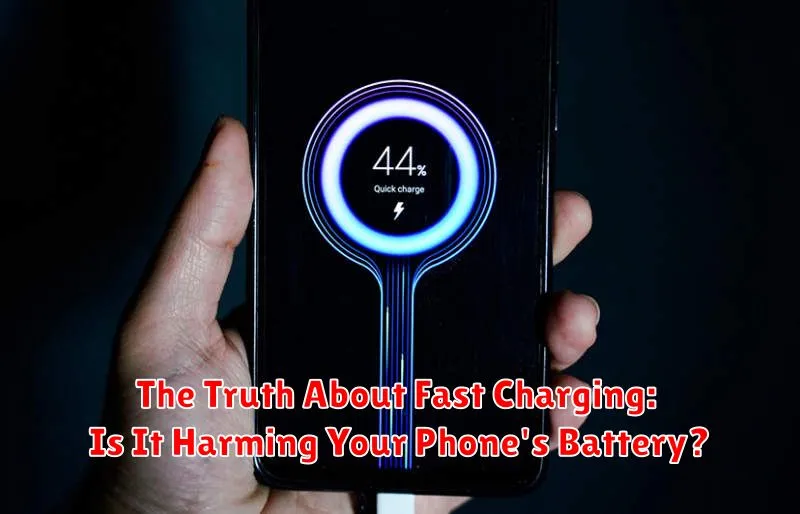
In today’s fast-paced world, we demand instant gratification in nearly every aspect of our lives, and our smartphones are no exception. Fast charging has become a highly sought-after feature, promising to juice up our devices in a fraction of the time compared to conventional charging methods. But amidst the convenience, a persistent question lingers: is this rapid replenishment coming at the expense of our phone’s battery health? This article delves into the truth about fast charging, examining the underlying technology, its potential impact on battery lifespan, and best practices to mitigate any potential risks. We’ll explore whether the speed and efficiency of fast charging truly outweigh the concerns surrounding battery degradation.
From understanding the nuances of fast charging protocols like Quick Charge and USB Power Delivery to exploring the chemical processes occurring within lithium-ion batteries during rapid charging, we aim to provide a comprehensive overview. We’ll address common misconceptions surrounding fast charging and its purported effects on battery longevity. By separating fact from fiction, this article empowers you to make informed decisions about how you charge your phone, optimizing for both speed and the long-term health of your battery. Join us as we uncover the truth about fast charging and determine whether it’s a friend or foe to your valuable mobile device.
Understanding How Fast Charging Works
Fast charging technologies deliver higher currents to a phone’s battery than standard charging. This is achieved by increasing the voltage and/or amperage supplied to the battery. Think of it like widening a pipe to allow more water to flow through. A standard charger might use 5 volts and 1 amp, while a fast charger might use 9 volts and 3 amps, delivering significantly more power.
The charging process typically occurs in phases. The initial phase, often called the constant current phase, involves pushing a large current to the battery, allowing for rapid charging from low percentages. As the battery nears capacity, the charging process shifts to the constant voltage phase. Here, the voltage is held steady while the current gradually decreases to prevent overcharging and damage.
Different fast charging standards, such as Quick Charge, Power Delivery, and Adaptive Fast Charging, utilize varying protocols and voltage/amperage combinations to achieve faster charging speeds. While the specifics differ, the underlying principle of delivering higher current in a controlled manner remains the same.
The Potential Effects of Fast Charging on Battery Health
While fast charging offers undeniable convenience, it’s important to acknowledge its potential impact on battery health. The primary concern is increased heat generation. Fast charging pumps a higher current into the battery, leading to elevated temperatures. Excessive heat can accelerate the chemical degradation within the battery, ultimately shortening its lifespan.
This accelerated degradation manifests as a reduction in overall battery capacity over time. You might notice your phone needing to be charged more frequently than it used to. While all batteries degrade naturally, fast charging can potentially hasten this process.
Furthermore, repeated exposure to high temperatures can also contribute to internal stress within the battery. This stress can further exacerbate degradation and potentially impact the long-term performance of the battery.
Debunking Common Myths About Fast Charging
Several myths surround fast charging technology, often causing unnecessary concern among users. Let’s address some of the most prevalent misconceptions.
Myth 1: Fast Charging Will “Fry” Your Battery
Fast charging is designed with safety mechanisms built into both the charger and the phone. These safeguards prevent overcharging and overheating, protecting the battery from damage. While heat is generated during fast charging, it’s generally within safe operating temperatures.
Myth 2: You Should Only Use the Charger That Came With Your Phone
While using the manufacturer’s charger is often recommended, it isn’t strictly necessary. Reputable third-party chargers that support the same fast charging standard as your phone are generally safe to use. Certification from recognized bodies ensures compliance with safety standards.
Myth 3: Fast Charging is Always Bad For Your Battery
All charging, including standard charging, contributes to battery degradation over time. While fast charging might accelerate this process slightly, the difference is often negligible compared to other factors like high temperatures and continuous high or low states of charge. The convenience offered by fast charging often outweighs the minor impact on long-term battery health for most users.
Tips for Minimizing Battery Degradation from Fast Charging
While fast charging offers undeniable convenience, adopting certain practices can help minimize potential strain on your battery. By being mindful of your charging habits, you can help prolong your phone’s battery lifespan.
Avoid consistently charging to 100%. Maintaining your battery level between 20% and 80% is generally recommended. Topping off constantly at 100% can put additional stress on the battery.
Limit extended periods of fast charging. If you don’t need your phone charged quickly, consider using a standard charger. This reduces the heat generated during the charging process.
Keep your phone cool while charging. Avoid charging your phone under direct sunlight or in excessively hot environments. Heat accelerates battery degradation.
Use the charger and cable provided by your phone’s manufacturer or certified alternatives. Off-brand or uncertified chargers may not adhere to optimal safety and charging standards, potentially harming your battery.
Optimizing Your Charging Habits for Long-Term Battery Life
Extending your phone’s battery lifespan goes beyond just how you utilize fast charging. Cultivating good charging habits plays a crucial role in preserving battery health over the long run. Here are a few key practices to consider:
Avoid Extreme Temperatures: Don’t leave your phone in excessively hot or cold environments while charging. Extreme temperatures can stress the battery and accelerate degradation.
Partial Charging is Okay: Contrary to older battery technology, you don’t need to fully discharge your phone before plugging it in. Topping off the charge throughout the day is perfectly acceptable and can actually be beneficial.
Unplug When Fully Charged: While modern phones have safeguards to prevent overcharging, it’s still a good idea to unplug your device once it reaches 100%. Leaving it plugged in for extended periods, especially overnight, can contribute to trickle charging and potentially strain the battery.
Use the Right Charger: Opt for the charger that came with your phone or a reputable alternative that’s compatible with your device’s charging specifications. Using an incompatible charger can lead to inefficient charging and potentially damage the battery.
Choosing the Right Charger and Cable for Your Phone
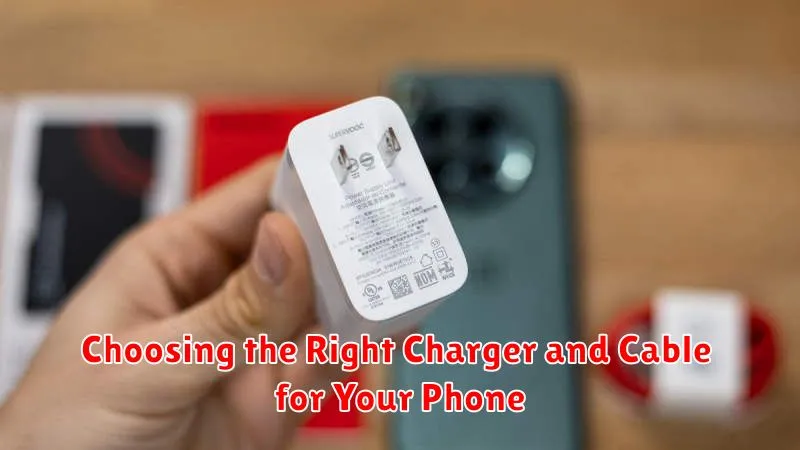
Using the correct charger and cable is crucial for safe and efficient fast charging. Your phone’s manufacturer likely recommends specific charging accessories. Using off-brand or counterfeit chargers and cables can lead to slower charging speeds, overheating, and even damage to your battery.
Look for chargers that are certified by reputable organizations. Check the charger’s specifications to ensure it’s compatible with your phone’s fast charging technology. The cable also plays a vital role. A low-quality cable can restrict current flow, negating the benefits of a fast charger. Opt for a cable that supports the desired charging speed and is from a trusted brand.
Key considerations when selecting a charger and cable:
- Compatibility: Ensure the charger and cable are compatible with your phone’s make and model.
- Power Output: Choose a charger with the appropriate wattage for optimal fast charging.
- Certification: Look for certifications from reputable organizations.
- Cable Quality: Invest in a durable and reliable cable from a trusted source.
Monitoring Battery Health and Performance
Keeping tabs on your battery’s health is crucial for maximizing its lifespan. Modern smartphones often include built-in tools to help you do this. Look for Battery Health or similar options within your phone’s settings menu. These features can provide insights into your battery’s current capacity relative to its original capacity when new. A significant drop in capacity might indicate a degrading battery.
Beyond built-in tools, various apps are available that offer more detailed battery information. These apps can track charging cycles, estimate remaining battery life, and even identify power-hungry apps. While these apps can be helpful, remember that their accuracy can vary.
Observing your phone’s usage patterns is another important aspect of monitoring performance. Take note of how long a full charge typically lasts under your regular usage. A drastic decrease in usage time could signal a battery problem. Likewise, if your phone feels unusually hot during charging or regular use, it could point to a battery issue requiring attention.
When to Avoid Fast Charging: Extreme Temperatures and Other Factors
While fast charging is generally safe, certain situations warrant avoiding it to maximize battery lifespan. Extreme temperatures are a key factor. Avoid fast charging your phone in excessively hot or cold environments. High temperatures can exacerbate heat generated during fast charging, potentially degrading the battery more quickly. Similarly, extremely cold temperatures can hinder the chemical processes within the battery, making fast charging less effective and potentially stressful.
Another factor to consider is the battery’s current charge level. Fast charging is most efficient when the battery is depleted. As it nears full capacity, the charging speed automatically slows to prevent overcharging. Therefore, plugging in your phone for a quick top-up when it’s already at 80% or higher offers minimal benefit and might contribute to unnecessary heat buildup.
Finally, if you notice any unusual behavior during charging, such as excessive heat, swelling, or unexpected shutdowns, discontinue fast charging immediately and consult a professional. These signs could indicate an underlying issue with the battery or charging circuitry.
